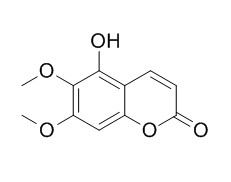
Tomentin
Tomentin has anti-inflammatory effects, it can inhibit the formation of λ-carrageenan footpad edema at 58%.
Inquire / Order:
manager@chemfaces.com
Technical Inquiries:
service@chemfaces.com
Tel:
+86-27-84237783
Fax:
+86-27-84254680
Address:
1 Building, No. 83, CheCheng Rd., Wuhan Economic and Technological Development Zone, Wuhan, Hubei 430056, PRC
Providing storage is as stated on the product vial and the vial is kept tightly sealed, the product can be stored for up to
24 months(2-8C).
Wherever possible, you should prepare and use solutions on the same day. However, if you need to make up stock solutions in advance, we recommend that you store the solution as aliquots in tightly sealed vials at -20C. Generally, these will be useable for up to two weeks. Before use, and prior to opening the vial we recommend that you allow your product to equilibrate to room temperature for at least 1 hour.
Need more advice on solubility, usage and handling? Please email to: service@chemfaces.com
The packaging of the product may have turned upside down during transportation, resulting in the natural compounds adhering to the neck or cap of the vial. take the vial out of its packaging and gently shake to let the compounds fall to the bottom of the vial. for liquid products, centrifuge at 200-500 RPM to gather the liquid at the bottom of the vial. try to avoid loss or contamination during handling.
Nutrients.2019, 11(6):E1380
Chem Biodivers.2023, 20(10):e202300741.
LWT2024, v208:116677
Pharmaceuticals (Basel).2021, 14(3):260.
Evid Based Complement Alternat Med.2021, 2021:8850744.
Front Pharmacol.2020, 11:683.
Cells. 2023, 12(15):1934.
Sci Rep. 2018, 462(8)
Pharmacol Rep.2022, 74(1):175-188.
Biorxiv.2020, doi: 10.1101.
Related and Featured Products
Planta Med. 2014 Feb;80(2-3):209-14.
Sphaeralcic acid and tomentin, anti-inflammatory compounds produced in cell suspension cultures of Sphaeralcea angustifolia.[Pubmed:
24488717 ]
Sphaeralcea angustifolia, an endangered plant species in Mexico, is employed to treat inflammatory processes and as a wound healing remedy. Scopoletin (1) was reported as one of the main bioactive compounds in this plant.
METHODS AND RESULTS:
Here, we isolated and identified compounds with anti-inflammatory properties from the suspension-cultured cells of S. angustifolia. The CH2Cl2 : CH3OH extract of the cells exhibited anti-inflammatory properties in acute inflammation models. Two compounds were isolated, 5-hydroxy-6,7-dimethoxycoumarin, named Tomentin (2), and 2-(1,8-dihydroxy-4-isopropyl-6-methyl-7-methoxy)-naphthoic acid, denominated as sphaeralcic acid (3). Their structures were determined by spectroscopic and spectrometric analyses. The anti-inflammatory effects of both compounds were also evaluated.
CONCLUSIONS:
At a dose of 45 mg/kg, compound 2 inhibited the formation of λ-carrageenan footpad edema at 58 %, and compound 3 at 66 %.
Local application of compound 2 (225 mM per ear) or 3 (174 mM per ear) inhibited the phorbol ester-induced auricular edema formation by 57 % or 86 %, respectively. The effect of compound 3 was dose-dependent and the ED50 was 93 mM.